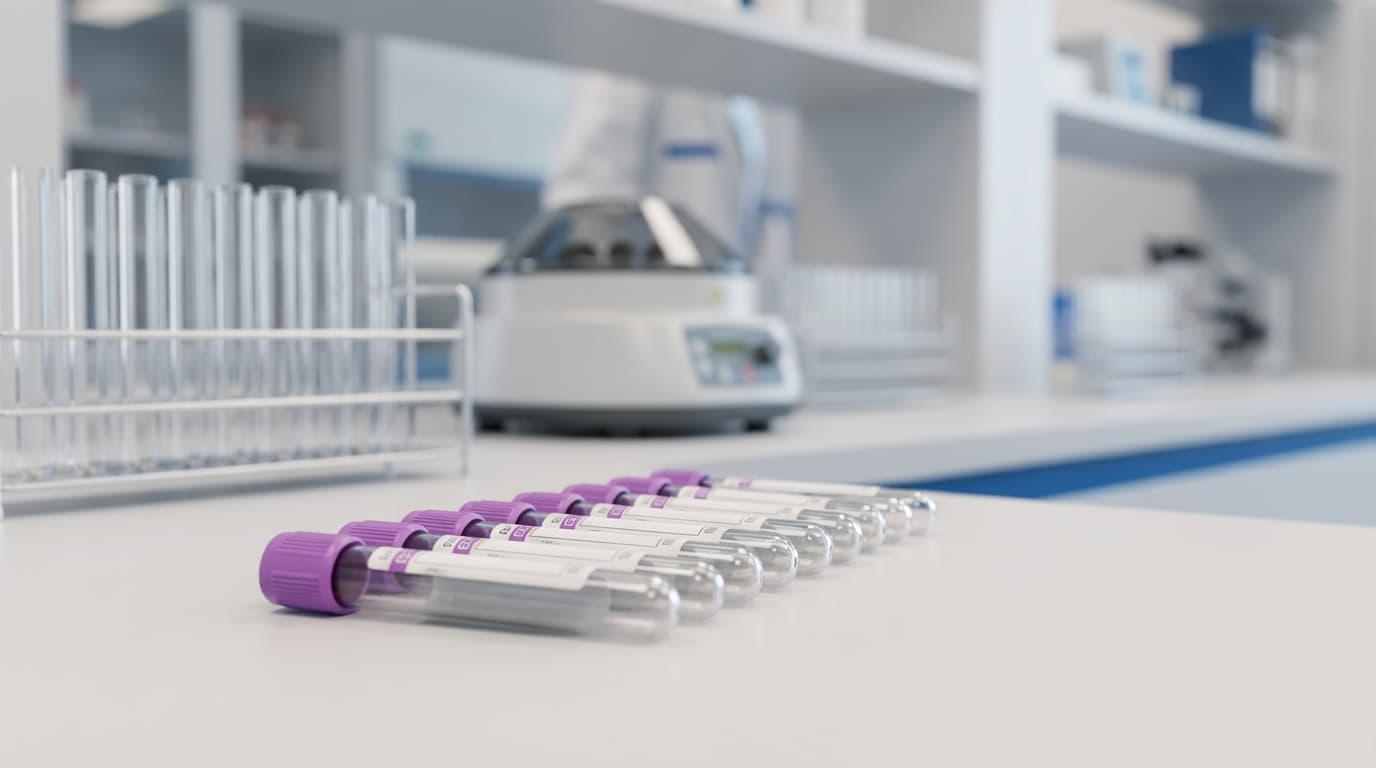
Tissue of Origin: The Holy Grail of Veterinary Liquid Biopsy

We can find cancer in the blood, but can we tell you where it is? We explore the current limits of localization and the future promise of methylation panels.
Tissue of Origin: The Holy Grail of Veterinary Liquid Biopsy
A positive liquid biopsy result is a "good news / bad news" situation.
* The Bad News: Your dog has cancer.
* The Good News: We caught it early.
* The Frustrating News: We don't know where it is.
This is the "Tissue of Origin" (TOO) problem. Current veterinary tests are excellent at detecting the presence of malignancy (via mutations or copy number changes), but genomic mutations often don't have a return address.
The Problem with Mutations
Take the BRAF mutation. In dogs, this is strongly associated with Urothelial Carcinoma (bladder/prostate cancer). If we find it, we know where to look.
But what about a TP53 mutation? That gene is broken in osteosarcoma, hemangiosarcoma, lymphoma, and mammary carcinoma. Finding a TP53 mutation tells you "Cancer is here," but it doesn't tell you to x-ray the leg or ultrasound the spleen.
This leads to the "Confirmatory Hunt"—expensive full-body imaging to find the tumor.
The Solution: Epigenetics (Methylation)
The future of TOO lies in Epigenetics.
Every cell in the body has the same DNA code, but a liver cell uses a different part of the manual than a lung cell. They control this by adding "bookmarks" or "closed" signs to the DNA. These signs are chemical tags called Methylation.
* The Liver Pattern: Liver cells have a specific methylation pattern.
* The Lung Pattern: Lung cells have a different one.
When a liver tumor sheds DNA, that DNA carries the "Liver Methylation Signature." By reading these tags, the lab can report: "Cancer Signal Detected. Origin: Hepatic."
The Veterinary Watchlist
Currently, methylation panels are standard in human liquid biopsy (e.g., Galleri test). In veterinary medicine, this is an emerging technology (see our blog Watchlist). Research is underway to map the "methylome" of canine cancers.
We expect the next generation of canine liquid biopsy tests (arriving ~2026-2027) to include Tissue of Origin predictions, turning a "Cancer Hunt" into a targeted confirmation.