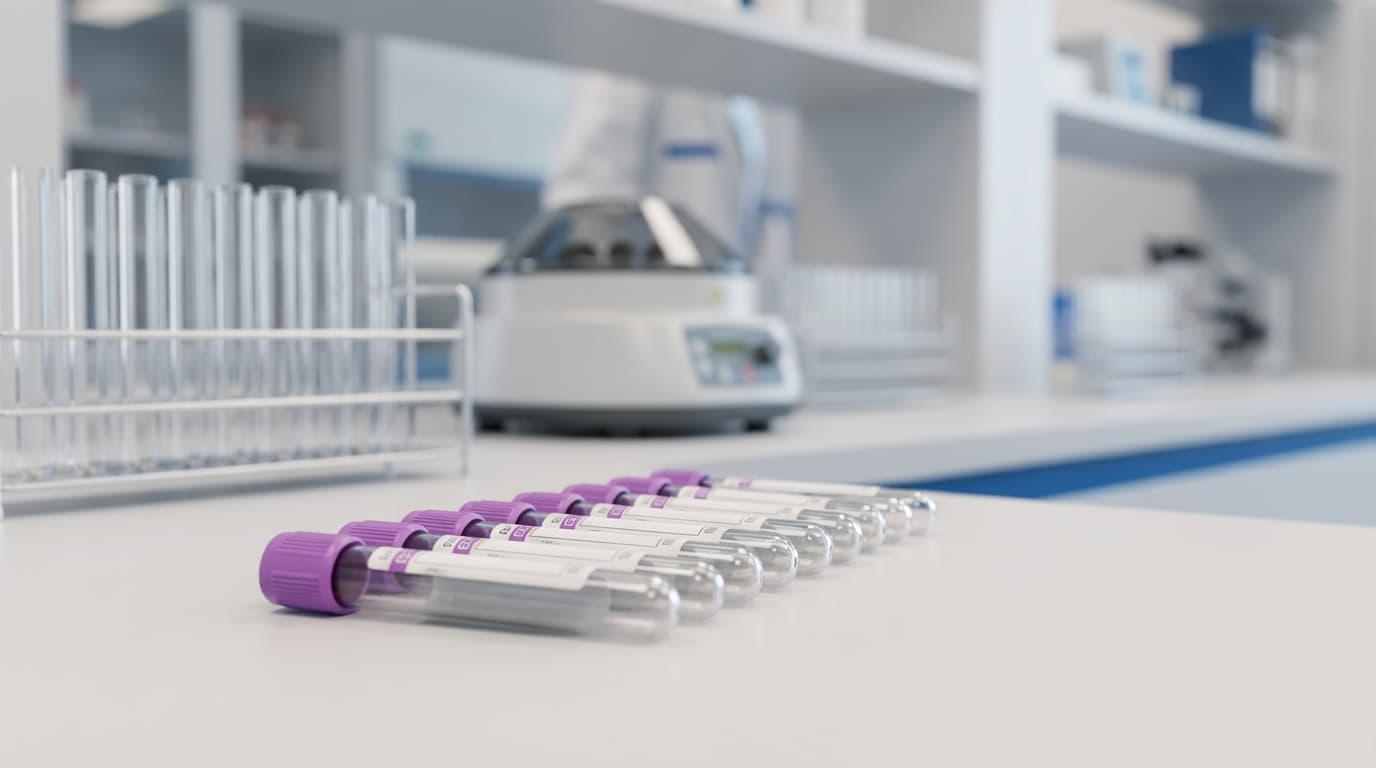
Post-Op Monitoring: The 'Clean Slate' Protocol
Did the surgery get it all? How to use the rapid clearance of cfDNA to check for residual disease 14 days after tumor removal.
Post-Op Monitoring: The "Clean Slate" Protocol
The surgery is done. The splenic mass is out. The histopath says "Hemangiosarcoma."
The owner asks: "Did we get it all? Or has it already spread?"
Ultrasound can't see microscopic cells. Chest x-rays are insensitive. But liquid biopsy can give us an answer.
The Clearance Concept
Recall that cfDNA has a half-life of <2 hours.
* Pre-Op: The large primary tumor is dumping ctDNA into the blood. Levels are high.
* Surgery: You remove the primary source.
* Post-Op (Hours): The ctDNA from the mass clears rapidly.
Post-Op (Weeks): Any ctDNA remaining in the blood must* be coming from a different source—metastases.
The Protocol
Do not test the day after surgery.
Surgery itself is traumatic. Cutting muscle and tissue releases "healthy" necrotic DNA (from the incision site) which will spike the total cfDNA and obscure the results.
Wait 10–14 Days.
By day 14, surgical inflammation has healed. The "trauma noise" is gone.
Interpreting the Result
1. Negative / Baseline: This is the "Clean Slate." There is no detectable molecular disease. The prognosis is better; the dog may have a longer Disease-Free Interval (DFI).
2. Positive / High: This is Minimal Residual Disease (MRD). Despite the clean margins on the pathology report, there are micrometastases in the liver or lungs shedding DNA.
Action:* This justifies starting chemotherapy immediately. It also manages owner expectations—recurrence will likely be sooner.
Why do this?
It moves oncology from "wait and see" to "predict and act." Instead of waiting for a nodule to appear on a radiograph 3 months later, you know the status 2 weeks post-op.