Nucleosomes vs. cfDNA: Same Biological Event, Different Diagnostic Signal
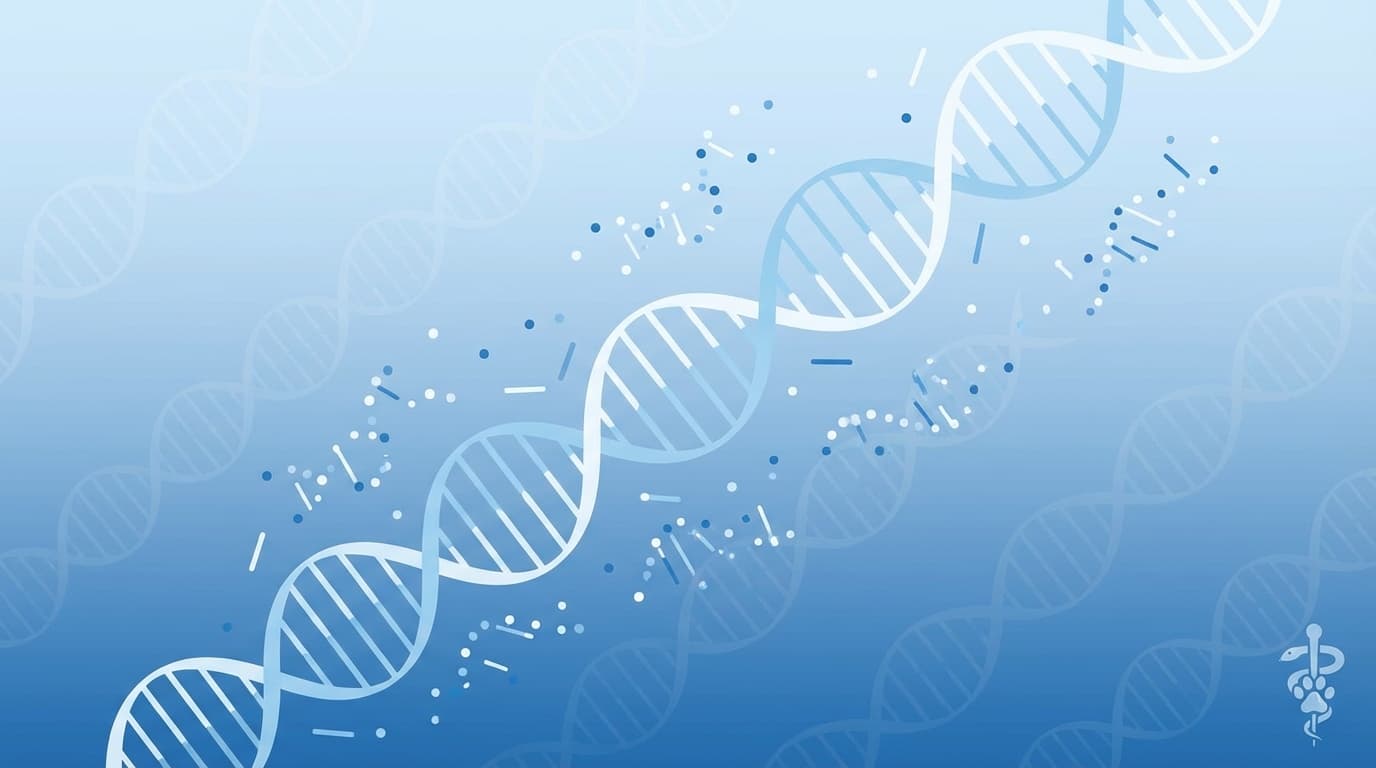
DNA doesn't float naked in the blood—it is wrapped around histone spools called nucleosomes. We explain why measuring the 'spool' might sometimes be better than measuring the 'thread'.
Nucleosomes vs. cfDNA: Same Biological Event, Different Diagnostic Signal
In the world of liquid biopsy, we talk endlessly about "cfDNA." But if you zoomed in on the bloodstream with a molecular microscope, you wouldn't see naked strands of DNA floating freely. You would see nucleosomes.
Understanding the structure of the nucleosome is key to understanding the next generation of veterinary diagnostics, particularly in critical care.
The Biology: The Spool and the Thread
DNA is a 2-meter-long molecule crammed into a 6-micron nucleus. To fit, it is wrapped around protein spools called histones.
* The Nucleosome: This is the core unit—a complex of 8 histone proteins with roughly 147 base pairs of DNA wound around it.
Release: When a cell dies (apoptosis), enzymes snip the DNA between these spools. What is released into the blood is usually the whole package: the histone spool plus* the DNA thread.
The Assays: ELISA vs. PCR
While they come from the same source, we measure them differently:
1. cfDNA Assays: These typically use PCR or fluorometry. They require us to extract the DNA, stripping away the histone proteins to read the genetic code or measure the DNA mass.
2. Nucleosome Assays: These typically use ELISAs (enzyme-linked immunosorbent assays). They use antibodies to bind to the histone proteins (specifically H3 or H4) or the DNA-histone complex intact.
Clinical Differences: Trauma and Sepsis
Why does this matter?
Research by Letendre & Goggs (2018) in veterinary critical care has shown that nucleosomes and cfDNA behave slightly differently.
* Stability: Nucleosomes might be more stable in circulation than naked DNA, or cleared differently by the liver.
* Prognostic Power: In the study of dogs with trauma and sepsis, nucleosome concentrations sometimes correlated better with survival (non-survivors had much higher levels) than cfDNA alone.
The "NET" Factor
In diseases like IMHA or Sepsis, neutrophils release NETs (Neutrophil Extracellular Traps). These are not just DNA; they are heavily decorated with histones and enzymes. An assay specifically targeting nucleosomes might pick up this "toxic" aspect of the pathology better than a simple DNA count.
The Future
Currently, most clinical tests focus on cfDNA because it allows for sequencing (finding cancer mutations). However, "Nucleosome levels" (measured in Arbitrary Units, AU) are emerging as a powerful companion biomarker for estimating the severity of tissue injury and inflammation in the ICU.