
Hemolysis: The 'Red' Flag That Ruins Results
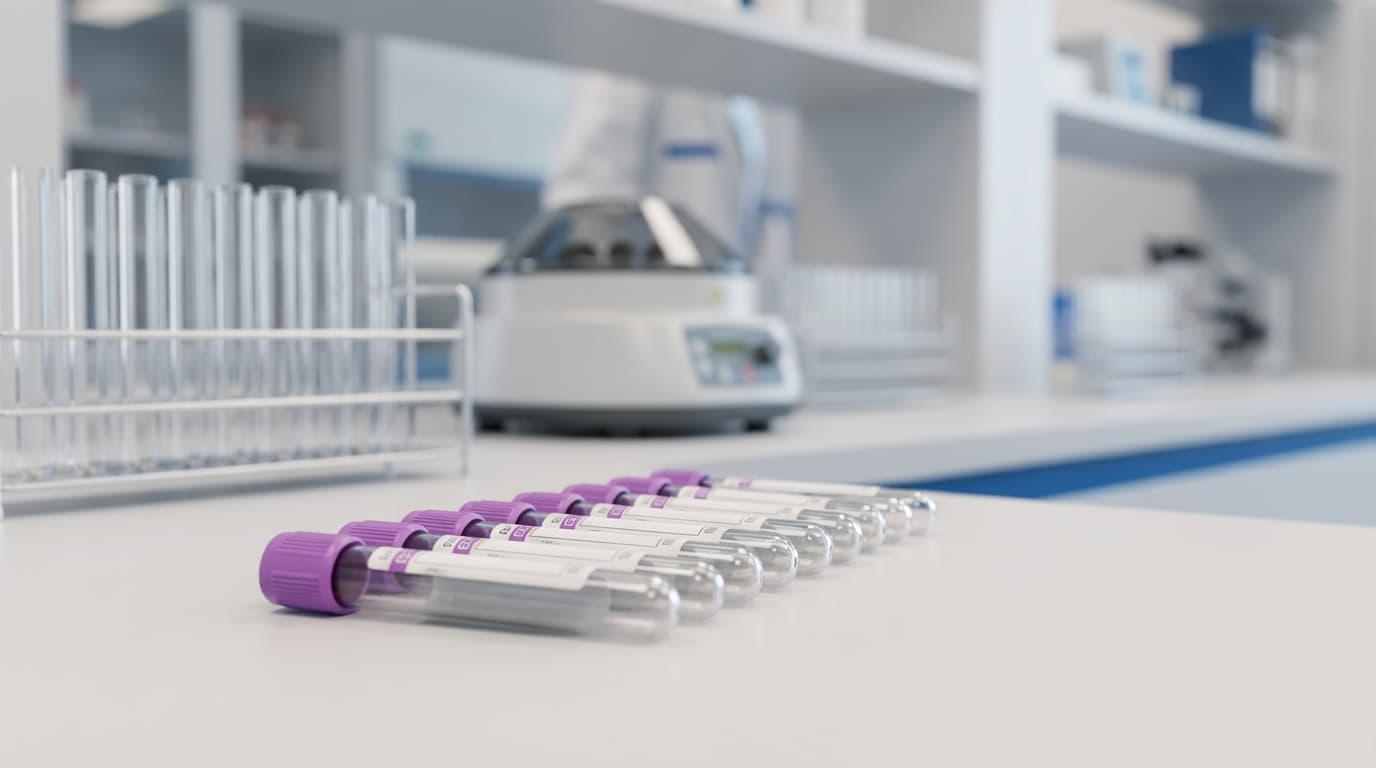
Why pink plasma leads to false negatives, and how to define rejection criteria for hemolyzed samples.
Hemolysis: The "Red" Flag That Ruins Results
We have all seen it: you spin down a blood tube, and instead of straw-colored yellow plasma, you get pink or red fluid. In a chemistry panel, this might mess up your bilirubin or potassium readings. In cfDNA testing, it is catastrophic.
The Biology of the Pink Tube
Hemolysis is the rupture of Red Blood Cells (RBCs). While RBCs in dogs are anucleated (they don't contain DNA), hemolysis is rarely an isolated event.
If the draw was traumatic enough (high vacuum pressure, small needle, vigorous shaking) or if the sample sat too long to cause RBC lysis, you can virtually guarantee that White Blood Cells (WBCs) have also lysed.
And WBCs are packed with DNA.
The Dilution Effect
When WBCs burst in the tube, they release healthy, genomic DNA. This floods the plasma.
Imagine you are trying to detect a faint signal from a small tumor—let's say the tumor DNA (ctDNA) is present at 10 copies per milliliter.
* Clean Draw: The background healthy DNA is low (1,000 copies). The tumor fraction is 1%. The machine detects it.
* Hemolyzed Draw: The lysed WBCs dump 1,000,000 copies of healthy DNA into the sample. The tumor DNA is still there (10 copies), but now the fraction is 0.001%.
This pushes the tumor signal below the Limit of Detection (LoD) of the assay. The machine reports "No Cancer Detected."
Hemolysis causes False Negatives.
Visual Grading Scale
Most labs use a visual scale or a spectrophotometric "Hemolysis Index."
1. 0 (Straw): Perfect.
2. 1+ (Faint Pink): Caution. Some sensitive assays might still work, but confidence is lower.
3. 2+ (Red/Cherry): Reject. Do not run this sample. The risk of error is too high.
4. 3+ (Dark Red/Opaque): Useless.
How to Avoid It
1. Clean Stick: Don't fish for the vein.
2. Gentle Vacuum: If using a syringe, pull back slowly. If using a vacutainer, ensure the needle gauge matches the vein size.
3. Remove the Needle: If transferring from syringe to tube, remove the needle and pop the cap off the tube. Don't squirt blood through a 22g needle under pressure.
4. Process Fast: Old blood hemolyzes.
If the plasma is red, the result will be wrong. Redraw.