
The Double-Spin Protocol: Why One Centrifuge Run is Not Enough
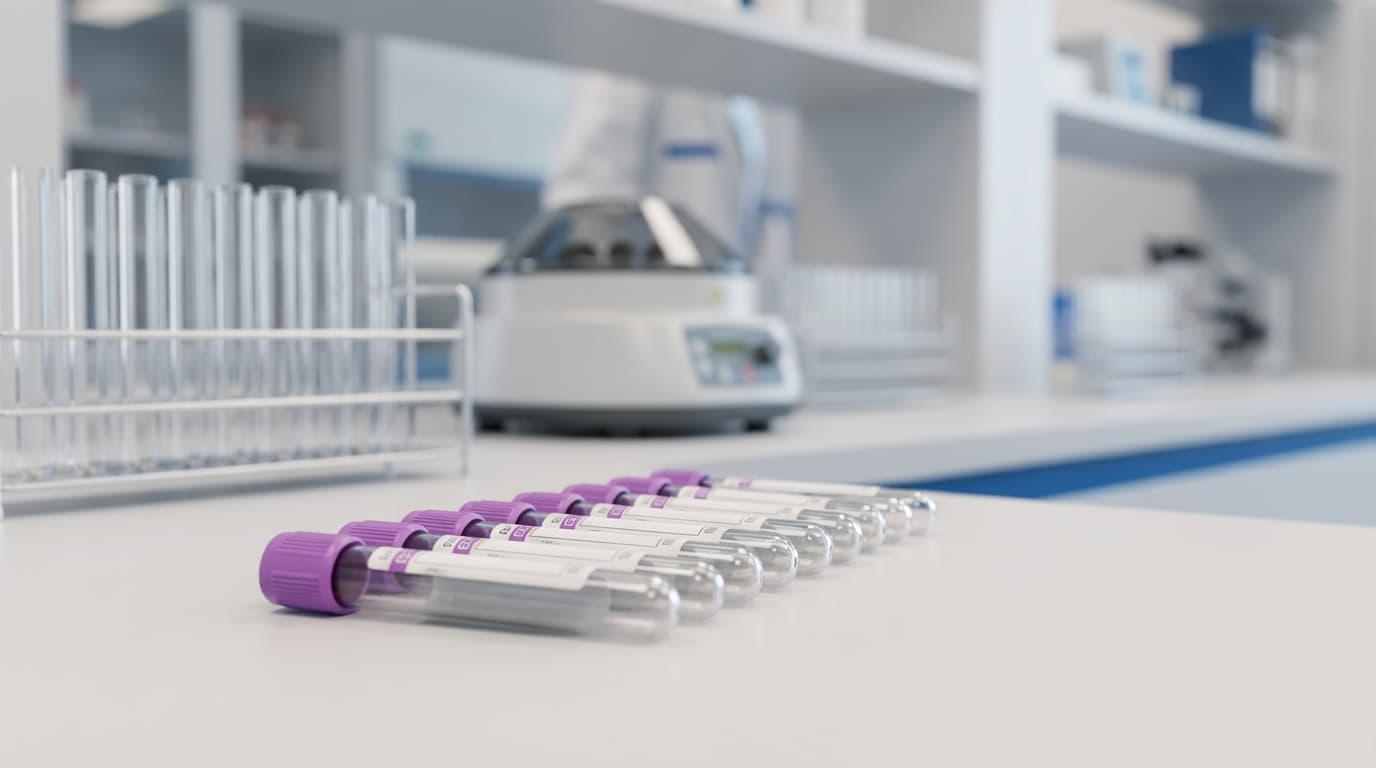
Standard clinic centrifuge protocols leave platelets and debris behind. Learn why the 'Double-Spin' is the mandatory standard for liquid biopsy.
The Double-Spin Protocol: Why One Centrifuge Run is Not Enough
Veterinary technicians are masters of the centrifuge. Every day, they spin down blood to get plasma for chemistry panels or serum for reference lab send-outs. The standard protocol—usually 10 minutes at a moderate speed—works perfectly for measuring creatinine, glucose, or liver enzymes.
However, for cell-free DNA (cfDNA), the standard spin is a recipe for failure.
To get a diagnostic-quality liquid biopsy sample, you must use the Double-Spin Protocol. Here is the physics of why.
The Problem: What Floats?
When you spin blood at 2,000 x g (a typical clinic centrifuge speed) for 10 minutes, you successfully pellet the heavy red blood cells and the white blood cells. You are left with plasma that looks clear to the naked eye.
However, suspended in that plasma are millions of platelets and microscopic cellular debris (microvesicles).
1. Platelets: While mammalian platelets do not have nuclei, they do contain mitochondria. Mitochondrial DNA is abundant and will be detected by total DNA assays (like fluorometry), artificially inflating the cfDNA concentration.
2. Debris: Fragments of apoptotic cells that haven't fully settled can lyse during freezing or shipping, dumping genomic DNA into the sample.
If you run a sensitive PCR test on "single-spun" plasma, you are analyzing a mixture of true cfDNA and this cellular contamination. This increases background noise and decreases sensitivity for detecting cancer.
The Solution: The Two-Step Process
The goal is to create Cell-Free Plasma.
Spin 1: The Separation (Low Speed)
* Goal: Separate plasma from the buffy coat (WBCs) and RBCs. * Setting: 1,600 to 2,000 x g for 10 minutes. * Action: Carefully transfer the plasma supernatant to a new tube. Critical:* Leave a buffer layer (~0.5 cm) of plasma above the buffy coat. Do NOT get greedy. If you disturb the WBC layer, you ruin the sample.Spin 2: The Purification (High Speed)
* Goal: Pellet the platelets and remaining debris. * Setting: >10,000 x g (or "Hard Spin" on a microcentrifuge) for 10 minutes. If your clinic only has a general centrifuge, spin at maximum speed for 15–20 minutes. * Action: You will often see a tiny, pinhead-sized white pellet form at the bottom of the tube. That is the contamination you just removed. * Final Step: Transfer the top 90% of the plasma to your cryovial for freezing/shipping. Leave the bottom 10% (with the pellet) behind.Is it worth the effort?
Yes. Studies comparing single-spin vs. double-spin plasma in dogs show that single-spin samples have significantly higher DNA concentrations and higher variability. This "extra" DNA is artifactual.
In liquid biopsy, we are looking for a needle in a haystack (tumor DNA). The Double-Spin protocol removes the extra hay.