
The 4-Hour Rule: The Biology Behind the Clock
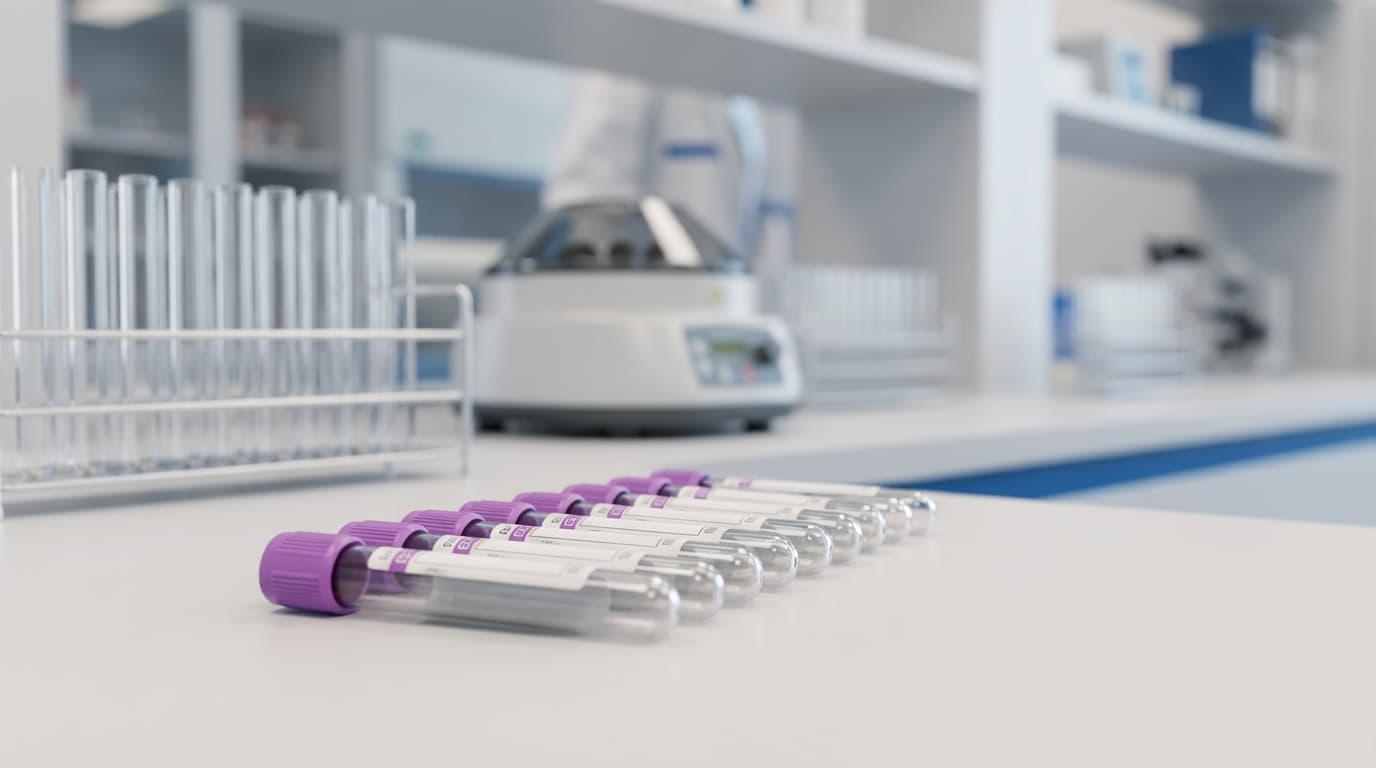
Why do samples degrade after 4 hours? It's not just 'aging'—it's a biological cascade of glucose depletion and white blood cell suicide.
The 4-Hour Rule: The Biology Behind the Clock
We have established that cfDNA samples in standard EDTA tubes must be processed within 4 hours. But why? Why not 6 hours? Why not 12?
It isn't an arbitrary administrative rule. It is based on the metabolic lifespan of a white blood cell (WBC) in a test tube.
Phase 1: Glucose Depletion (0–2 Hours)
When blood is drawn into a tube, the cells are still alive. They continue to metabolize glucose. In an EDTA tube at room temperature, the RBCs and WBCs consume the available glucose rapidly.
Status:* Sample is stable. cfDNA levels reflect the patient's baseline.
Phase 2: Metabolic Stress (2–4 Hours)
As glucose runs out, the cells enter metabolic stress. The ATP pumps that maintain the cell membrane begin to fail. The WBCs, particularly neutrophils (which are fragile), become agitated.
Status:* Danger zone. Some sensitive cells may begin to leak, but the sample is likely still salvageable.
Phase 3: Apoptosis and Lysis (>4 Hours)
This is the tipping point. Starved of energy, the WBCs initiate apoptosis (programmed suicide).
* The Event: The cell breaks down its own chromatin and ruptures.
* The Release: A single lysed WBC releases roughly 6 picograms of genomic DNA.
That sounds small, but there are thousands of WBCs per microliter of blood. If even 1% of the WBCs lyse, they release enough genomic DNA to increase the total cfDNA concentration of the sample by 10-fold to 100-fold.
The Consequence: Signal Dilution
Imagine you are looking for Tumor DNA (ctDNA) which is present at 10 copies/mL.
* At 1 Hour: Background healthy DNA is low. You can find the 10 copies.
* At 6 Hours: Background healthy DNA has exploded to 10,000 copies due to lysis. Your 10 tumor copies are now statistically invisible.
The Takeaway
The 4-hour rule is a biological hard stop. You cannot "fix" a sample processed at 8 hours. The noise has already drowned out the signal.